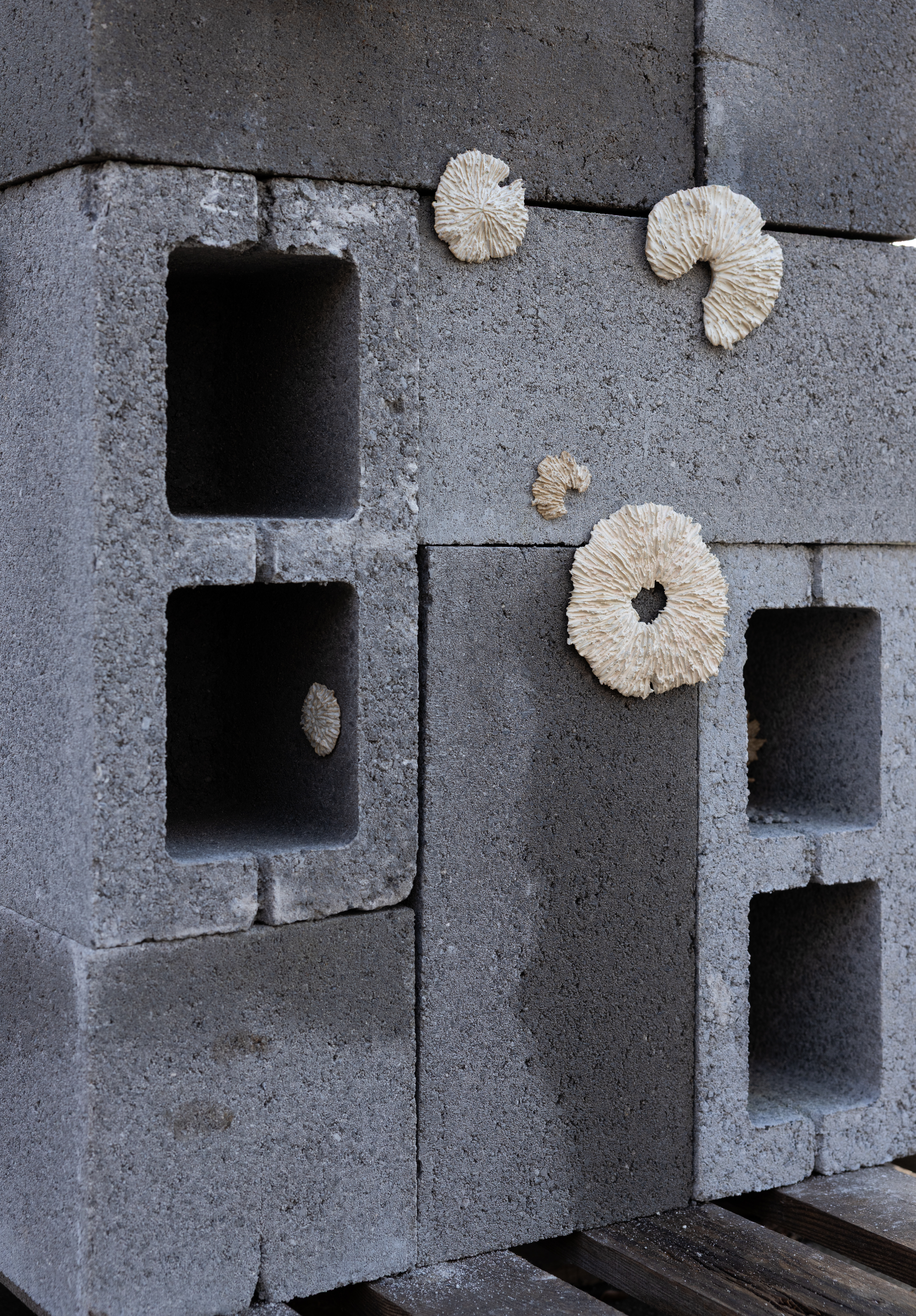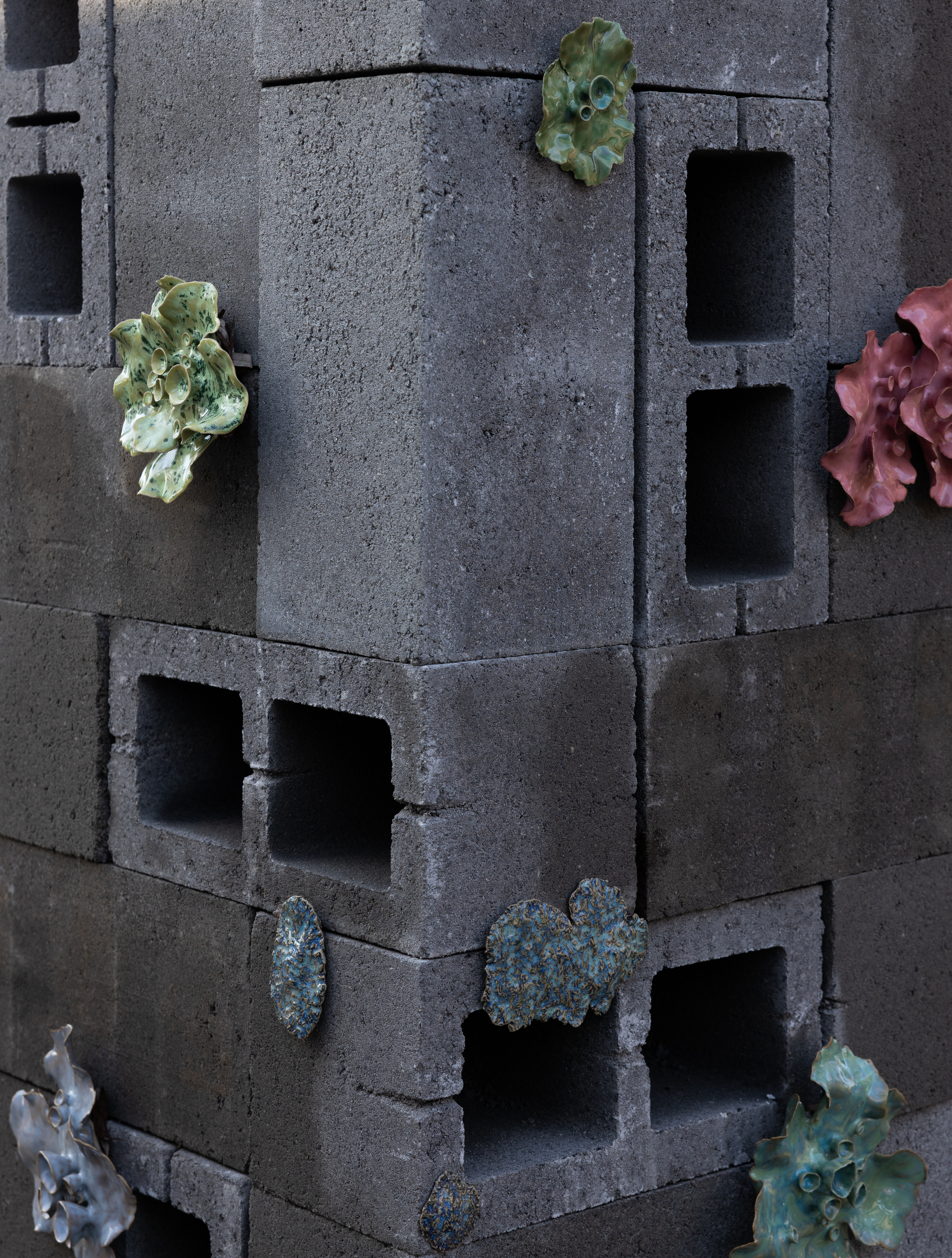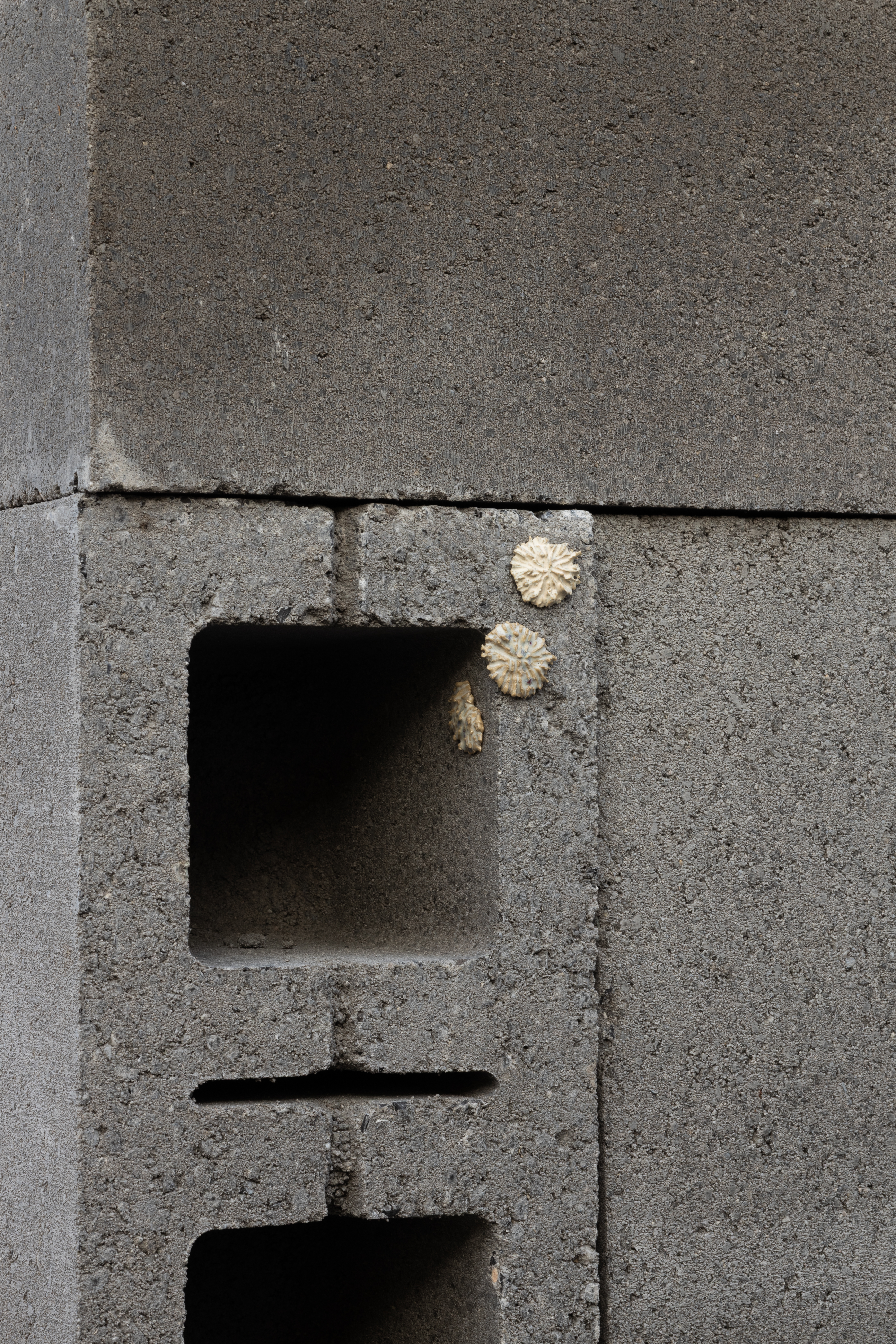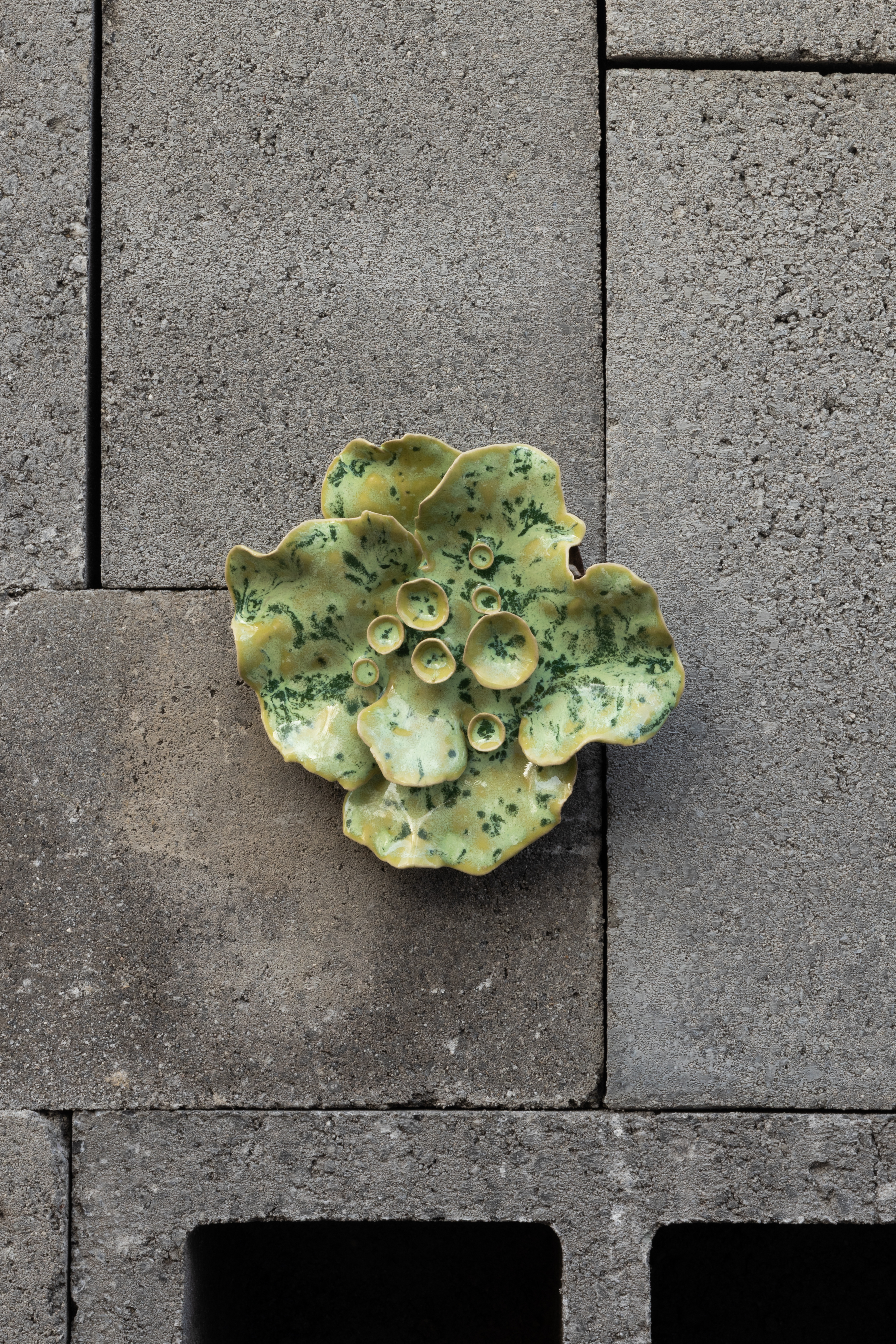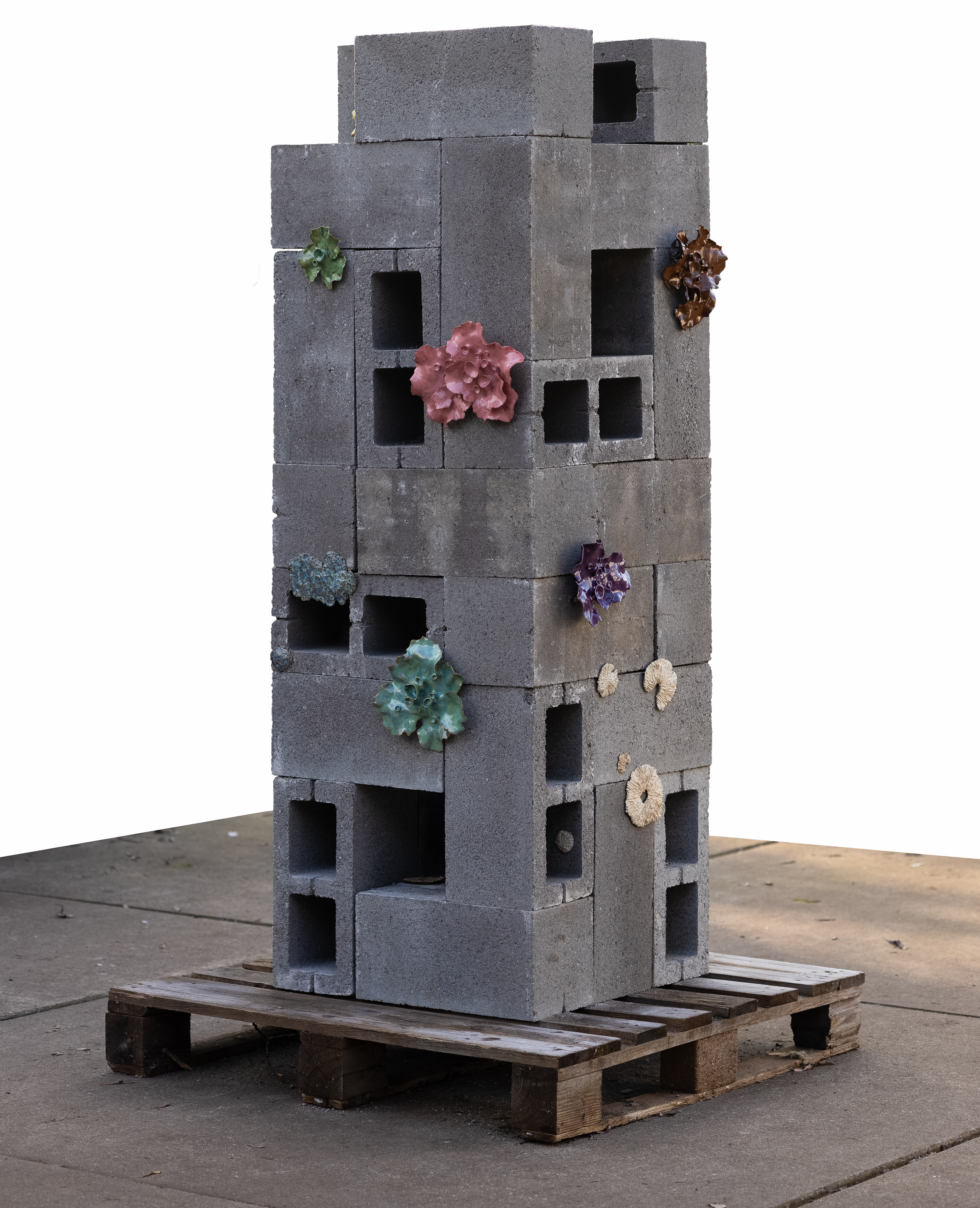
Korstmos / Lichen
Two years ago, I was surprised in the mountains by bright orange patches on a rock. They were visible from a great distance, as if they didn’t belong there. Up close, the patches seemed like a kind of small plant, a natural phenomenon. Sometimes the patches are bright yellow and grainy, sometimes dark green and waving in all directions. I even saw a grey variant with red dots. What was happening on these stones?
They turned out to be lichens. Suddenly, I saw them everywhere among the concrete and asphalt of Rotterdam. They color the paving stones and trees yellow, gray-green and blue. They even grow on lampposts or abandoned cars, but how can they survive in these places?
By now I know that lichens are not mosses and that they don’t even fall under plants. They grow from a symbiotic relationships between fungi, algae and sometimes other partners. I want to collaborate with them and let them grow on my sculptures, but soon I discovered that they do not allow themselves to be forced. The symbiosis only arises under specific conditions, and they develop by just a few millimeters per year.
It is painful to see how lichens in the city are often regarded as stains. They are scrubbed away as if they don’t belong there. What we scrape off in a few seconds sometimes took decades to grow. Precisely because they form so incredibly slowly, removing them feels especially wasteful. Instead of seeing them as dirt, we should value them as small, patient inhabitants of the city.